
Inside the RTSP
There are three typical categories of data whose delivery could be controlled with RTSP:
- real-time stored clips
- real-time live feeds
- non real-time stored data
There are two types of control sessions - Global control session and the
Stream control session.
There are four types of messages:
- connection messages - sent on the GCS - used to negotiate protocol version and client identity
HELLO, ID, ID_RESP, REDIRECT, OPTIONS, GOODBYE
- object messages - sent on the SCS (one of each exists for each stream) - used to request
objects, set transport mechanisms and control data delivery
FETCH, STREAM_HEADER, SET_TRANSPORT, SET_SPEED, PLAY_RANGE,
STREAM_SYNC, SET_BLOCK_SIZE, STOP, RESUME, SEND_REPORT, ERROR,
UDP_RESEND...
- custom messages - providing general notification between server and client
EVENT_NOTIFY
- media-specific options and extension mechanism
GET_PARAM, PARAM_REPLY, PARAM_REFUSE, SET_PARAM
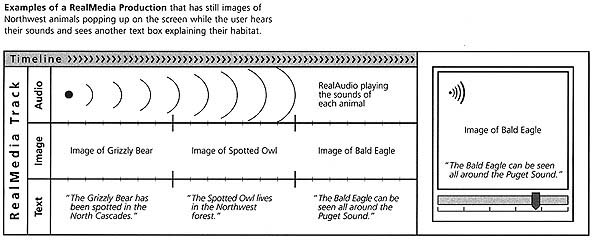
The example of RTSP track
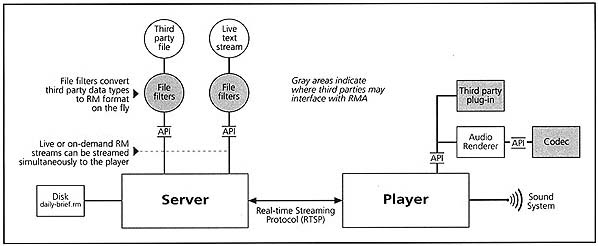
The RTSP open architecture


